
Technology
Built around the data,
not the screen.
Most indoor golf is a video game with a launch monitor stapled on. OTG was specified the other way around: four Foresight Falcon overhead units running tour-level photometric capture, paired with a dedicated PuttView green that projects break onto the surface in real time. The simulators serve the data. Not the other way around.
The System
Foresight Falcon. Overhead.
Quadrascopic photometric capture. The same imaging engine the tour uses.
There are two ways to track a golf ball indoors. Radar — fast, but inferring ball spin and club delivery from interpolated math. Photometric cameras — actually photographing the ball and club face at the moment of impact, then computing the rest from physical evidence. Foresight has spent twenty years building photometric launch monitors. The Falcon is what they made when they put four of those cameras in the ceiling.
The Falcon captures more than a dozen measured data parameters per shot — ball speed, launch angle, side angle, spin rate, spin axis, club head speed, angle of attack, club path, impact location, smash factor, and more. Crucially, these are measured directly from imagery, not inferred from doppler return. The result is the data accuracy professional fitters and instructors trust — the same Quadrascopic camera system used in Foresight's tour-grade GCQuad.
Mounting the system overhead delivers two practical advantages that floor-mounted units cannot. The hitting zone is large — 59 inches wide by 28 inches deep — so left-handed and right-handed players use the same bay without recalibrating. And there is nothing on the ground next to your ball. No box to aim at. No light to look down at. Just the ball, the tee, and your swing.
This is not the most affordable launch monitor available. It is the launch monitor a facility installs when it intends to be taken seriously by golfers who know the difference.
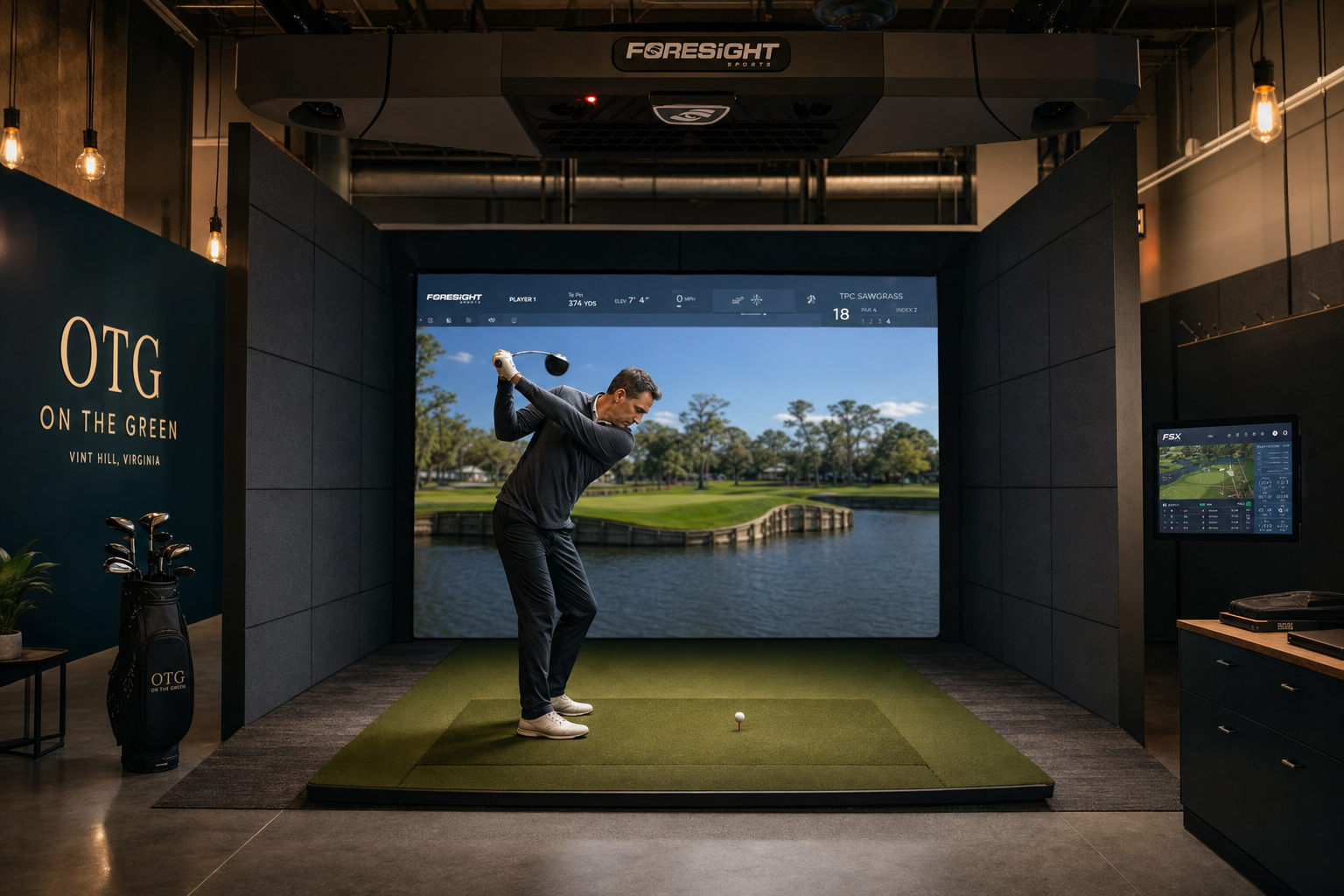
Measured, not calculated. There's a meaningful difference, and players who care about their data feel it on the first session.
FSX Play
Where you'll play.
Thousands of courses run on the FSX Play platform. A few worth naming:
The Links at Pebble Beach
Pebble Beach, California
The Old Course at St Andrews
Fife, Scotland
Spyglass Hill
Pebble Beach, California
TPC Sawgrass
Ponte Vedra Beach, Florida
Bandon Dunes
Bandon, Oregon
Bay Hill
Orlando, Florida
Harbour Town
Hilton Head, South Carolina
Whistling Straits
Kohler, Wisconsin
Royal County Down
Newcastle, Northern Ireland
The full library spans thousands of courses worldwide and is updated regularly. Course availability subject to FSX library and licensing.
The Green
PuttView. Learn to be a master of your putting game.
Augmented reality projected onto a real surface. Real ball, real putter, every line of break visible.
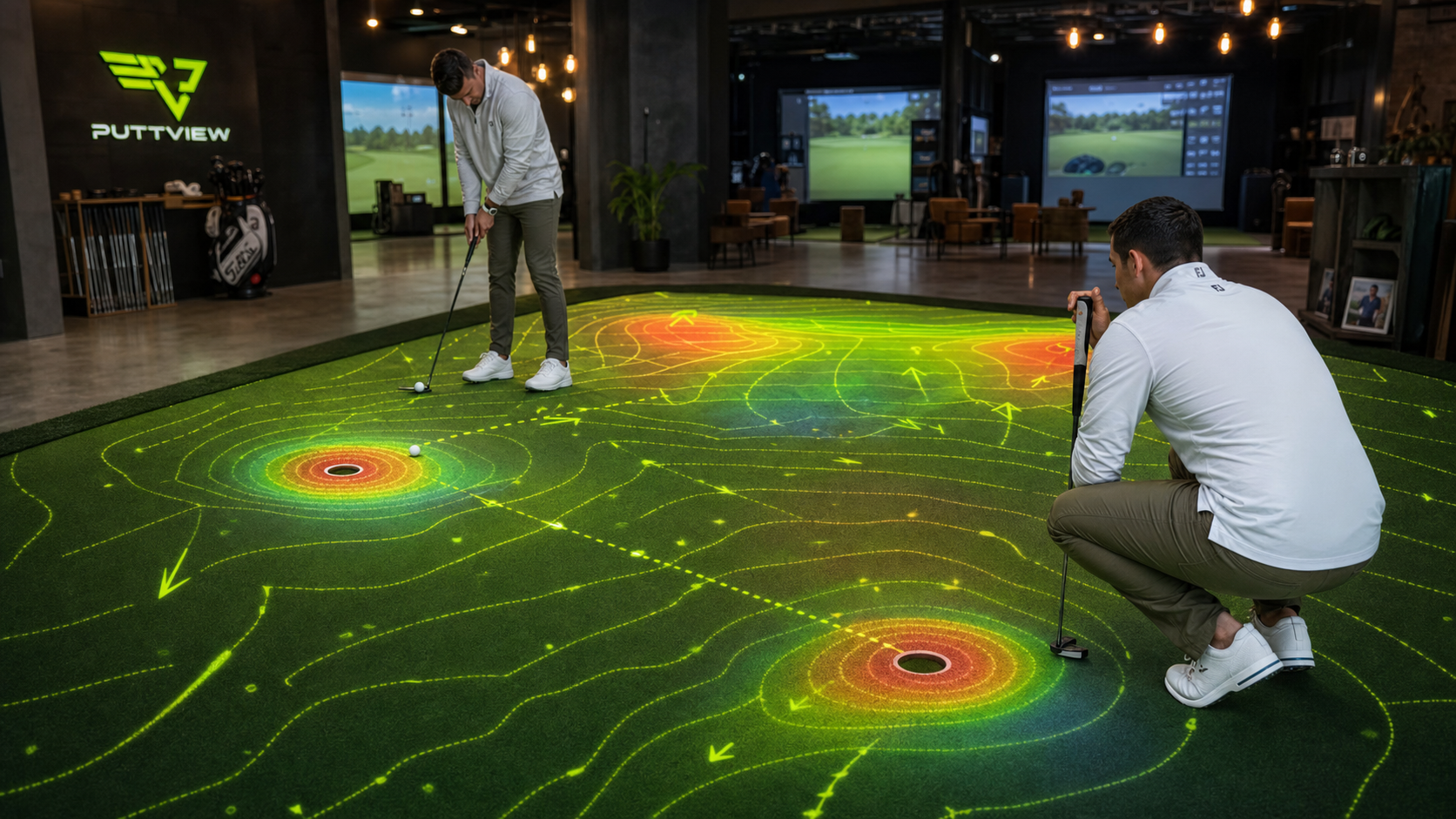
PuttView is not a screen. It is an actual CNC-milled putting green with real cups, set up to roll at tour speeds. What makes it different from any other practice green is a projector above and a ball-tracking camera that paints information directly onto the surface — the ideal line, the speed corridor, the topographical contours of the break — overlaid in light on the green you are standing on. You see the read before you putt it. You see your actual line drawn on the surface after you do.
Putting is the part of the game indoor golf usually fails. A simulator can render Pebble Beach in 4K, but the moment you reach the green most setups switch to a 2D overhead view and a power meter. PuttView solves this by being a real green, projected with real information. You read it the way you would on the course — by looking — but with the break, the line, and your tendencies made visible.
The system tracks your stroke and your ball, every roll, every miss, every speed adjustment. It can show you the line you should have hit and the one you actually did. It can run drills, games, and skills challenges. And because the surface is physical and the cups are real, the putt feels like putting — not like clicking a button.
For a serious player, PuttView is the part of OTG that pays for itself. There is no other facility in the region with this technology.
You'll read greens differently on a real course after a week on PuttView. That's the entire point.
Application
What this means for your game.
For practice.
Every swing produces measured data. No guessing. No 'felt like I hooked it.' You see ball speed, spin, club path, attack angle — and you see them change as you adjust. That feedback loop is what makes practice actually work.
For instruction.
PGA-level data is the same data instructors use to teach the tour. Your coach can read the numbers, point to the cause, and show you the fix on video — all in the same session, on the same bay you'll book again next week.
For fitting.
Club fitting on the Falcon is built on the same imaging engine professional fitters use. Real launch numbers from your actual swing, not a generic simulation. The fit you walk out with is the fit your clubs will actually deliver on the course.
Position
Why this setup, specifically.
There is no shortage of indoor golf in the broader region. There are radar-based simulators in basements and overhead camera systems in fitness clubs and floor-standing units in pro shops. We installed Foresight Falcons because we wanted measured data, not calculated estimates. We installed PuttView because no other technology makes the green readable indoors. We installed four bays and one green because that is how a serious facility is sized — not so small it can't host an event, not so large it can't feel quiet on a weekday afternoon.
If you are the kind of golfer who pays attention to gear, you already know what these specifications mean. If you are not, the short version: this is the equipment a tour player would ask for, in the configuration a club fitter would choose, in a room that was designed around the data rather than the screen.
Come hit it.
An hour on a Falcon and a putt on the PuttView green is the only sales pitch we need.